


Plate
Datelate 17th century
Maker
Japanese, Arita
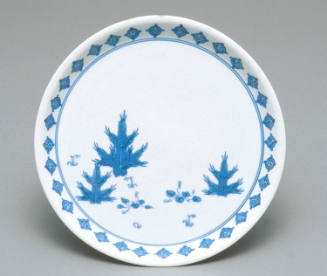
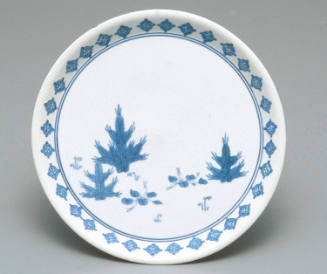
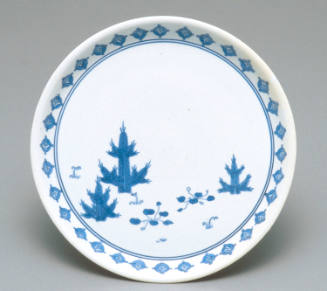
Label TextLike their Chinese counterparts, Japanese decorative motifs are usually emblems of auspicious meanings. The subject of tiger and bamboo was favored by Japanese potters and painters of the Kano¯ school in the seventeenth and eighteenth centuries. It symbolizes safety, for legend has it that the only way for the tiger to escape from its enemy the elephant is to enter a bamboo grove.
Object number56.122
Exhibition HistorySeattle, Washington, Seattle Art Museum, "Porcelain Stories: From China to Europe", February 17, 2000-May 7, 2000 (2/17/2000 - 5/7/2000)
Portland, Oregon, Portland Art Museum, "Gift to a City: Masterworks from the Eugene Fuller Memorial Collection in the Seattle Art Museum", cat. # 133Published ReferencesFuller, Richard E. "Japanese Art in the Seattle Art Museum: An Historical Sketch." Seattle, WA: Seattle Art Museum, 1960 ("Presented in commemoration of the Hundredth Anniversary of Diplomatic Relations between Japan and the United States of America"), no. 152
"Gift to a City" exhibition catalogue. Portland, OR: Portland Art Museum, 1965, cat. no. 133
Emerson, Julie, Jennifer Chen, & Mimi Gardner Gates. "Porcelain Stories, From China to Europe." Seattle, WA: Seattle Art Museum, 2000, p. 170
Weber, Julia. "Meissener Porzellane mit Dekoren nach ostasiatischen Vorbildern: Stiftun Ernst Schneider in Lustheim, vol 2." Munich, Germany: Bayerisches Nationalmuseum/Hirmer Verlag, 2013, fig. 41, p. 265, color.Credit LineEugene Fuller Memorial Collection
"Gift to a City: Masterworks From the Eugene Fuller Memorial Collection in the Seattle Art Museum," Portland, OR: Portland Art Museum, 1965, no. 133.
Dimensions1 3/4 x 9 3/4 in. (4.45 x 24.8 cm)
MediumHard paste porcelain
 log in


