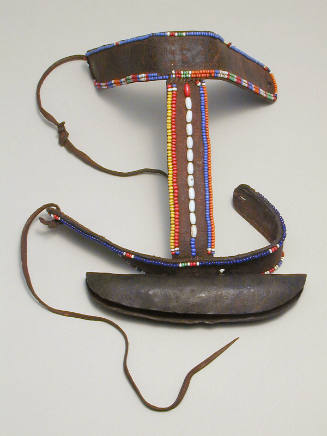
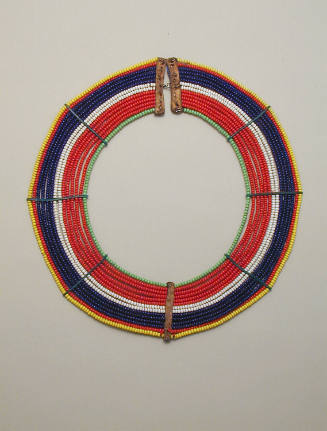
Armband
Datelate 20th century
Maker
Kenyan
Maker
Tanzanian
Maker
Maasai
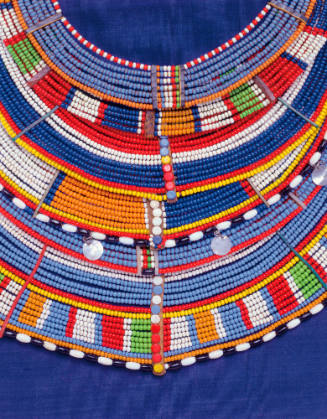
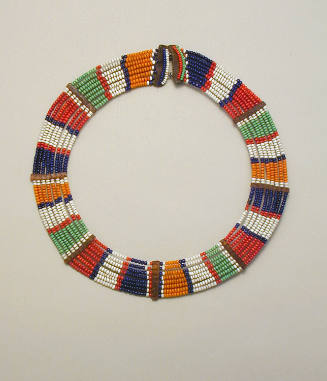
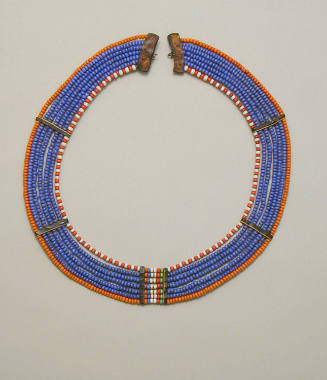
Label TextYoung morans (warriors) made and wore these ornaments when they were segregated together in a camp called olpul. Roughly known as "meat camps," olpul was devoted to honoring and harvesting the many cattle that are still the center of a moran's life. Originally, part of the horn of a bull calf was used to make the base for the armband and the remainder of the horn was used for storing milk or butter. Telephone wire and aluminum dangles set the stage for a sequence of colored glass beads in the colors that form the Maasai palette.
Object number98.1
Exhibition HistorySeattle, Washington, Seattle Art Museum, A Bead Quiz, July 1, 2008 - July 1, 2009Credit LineGift in memory of Marilyn O'Keeffe from Seattle Art Museum staff
DimensionsL.: 11 1/2 in.
Diam., Of band: 3 5/8 in.
MediumWood, metal, wire, and beads
 log in


