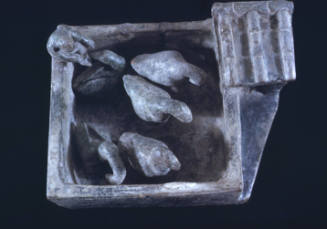
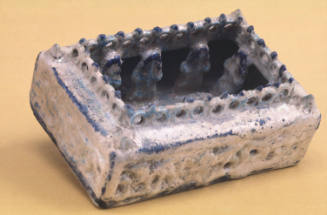
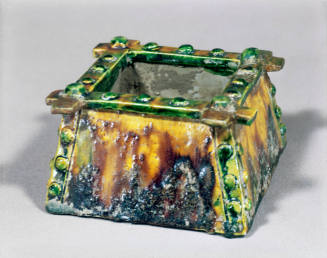
Pig Sty Model
Date25-220
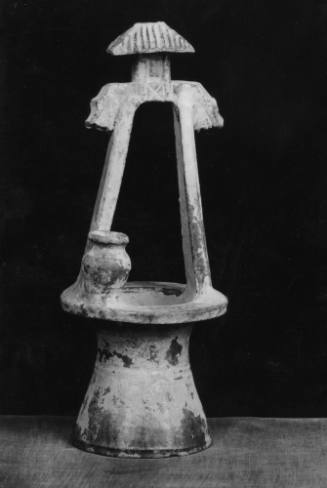
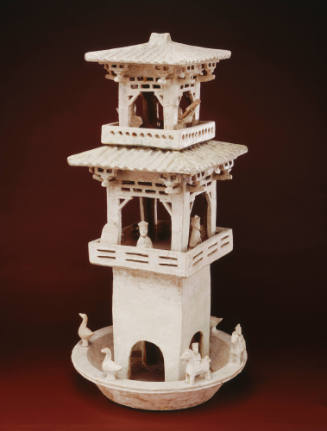
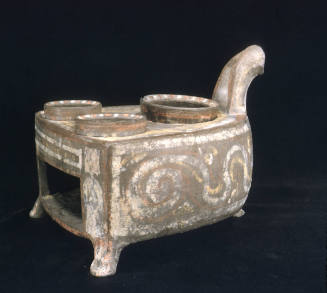
Label TextThe practice of providing the afterlife with necessities and comforts of daily life reached a high point in the Eastern Han dynasty with lively images of almost all tangible aspects of the human world. Domesticated animals such as pigs and chickens represented sources of food, while dogs-particularly popular as pets-served as tomb guardians. Legend has it that the Han Emperor Lingdi, who reigned around A.D. 170, even bestowed on his favorite dog the status of jin xian, the highest literary rank of the time.
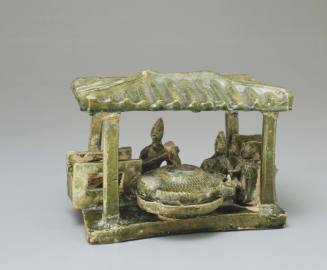
Ritual observances, centered around cooking and eating, played an important role in the Han funerary rites. Stoves, seen both in the pictorial arts and in models, offer insights into the culinary practices and even the menus of two thousand years ago. The model of a grain mill shows treadle-powered grindstones and mortars for processing grain, important technological advances developed for food production which remained unchanged in China until modern times.
Object number43.6
Exhibition HistorySeattle, Washington, Seattle Art Museum, "Timeless Grandeur: Art from China"
April 25, 2002 - June 12, 2005Credit LineEugene Fuller Memorial Collection
Dimensions2 3/4 x 9 1/2 x 7 1/4 in. (6.99 x 24.13 x 18.42 cm)
MediumEarthenware with lead glaze
Object number: 33.33

 log in


