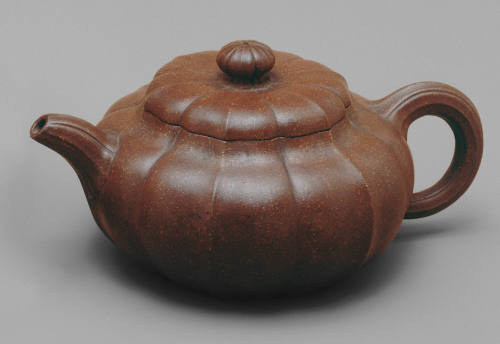
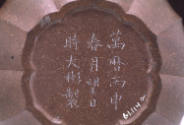
Teapot
Date1596
Maker
Shih-Ta-Pin
Chinese, (fl. 1620-40)
Label TextTea preparation methods changed in the Ming dynasty: instead of whisking powdered tea with hot water in a tea bowl, boiling water was added to tea leaves to steep in teapots. Yixing wares were known for their distinctive color and ability to enhance aromas. The Chinese literati favored them in the sophisticated activity of tea-drinking. They came in a rich variety of forms—this pot evokes a melon shape.
Object number61.114
Exhibition HistorySeattle, Washington, Seattle Art Museum, Pure Amusements: Wealth, Leisure, and Culture in Late Imperial China, Dec. 24, 2016 - May 15, 2022.Published References"Selected Works." Seattle, WA: Seattle Art Museum, 1991, p. 168Credit LineGift of Mr. and Mrs. Herbert Brink
Dimensions5 7/8 in. (14.92 cm)
Overall h.: 2 5/8 in.
Diam.: 4 in.
MediumYixing ware; red-brown stoneware
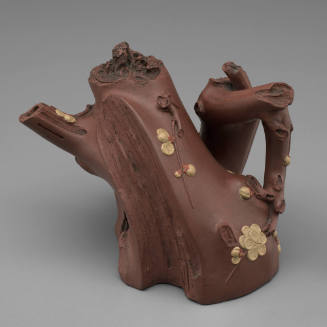
Chen Mingyuan
late 17th century - early 18th century
Object number: 41.3
 log in


